Candy Innovation & Global Trends
Explore expert guides, manufacturing breakthroughs, and market updates from ATIQ Food Co., Ltd.
2026 Best Functional Jelly Manufacturer for Global Buyers?
Table of Contents
Choosing a Functional Jelly Manufacturer for 2026 takes more than comparing bright packaging or low prices. Global buyers need clear ingredient specifications, stable texture, dependable lead times, and records that support each product claim. A sample should hold its shape, release cleanly from its cup, and taste consistent across batches. Small details matter.
Food scientist Dr. Kantha Shelke is a recognized expert in food science, but I cannot verify a specific statement from her about functional jelly sourcing. I won’t invent a quotation and attribute it to her. A practical guiding line for this article is: “Ask for evidence behind every claim.” It is plain advice. Still, it can be overlooked when a supplier’s presentation looks polished.
This guide examines formulation capability, ingredient traceability, quality systems, customization, packaging, and communication. Buyers should ask how a manufacturer controls batch variation and what documents accompany each shipment. They should also check whether proposed claims are supported and suitable for their target market. A factory tour or audit can reveal useful details, such as how staff record production checks and manage sample approvals. No supplier is perfect. Even a strong first sample may not predict long-term consistency, so careful follow-up matters. These checks help global buyers compare manufacturers with evidence, not promises.
Functional Jelly: Definition, Types, and Applications
2026 Best Functional Jelly Manufacturer for Global Buyers?
Functional Jelly: Definition, Types, and Applications
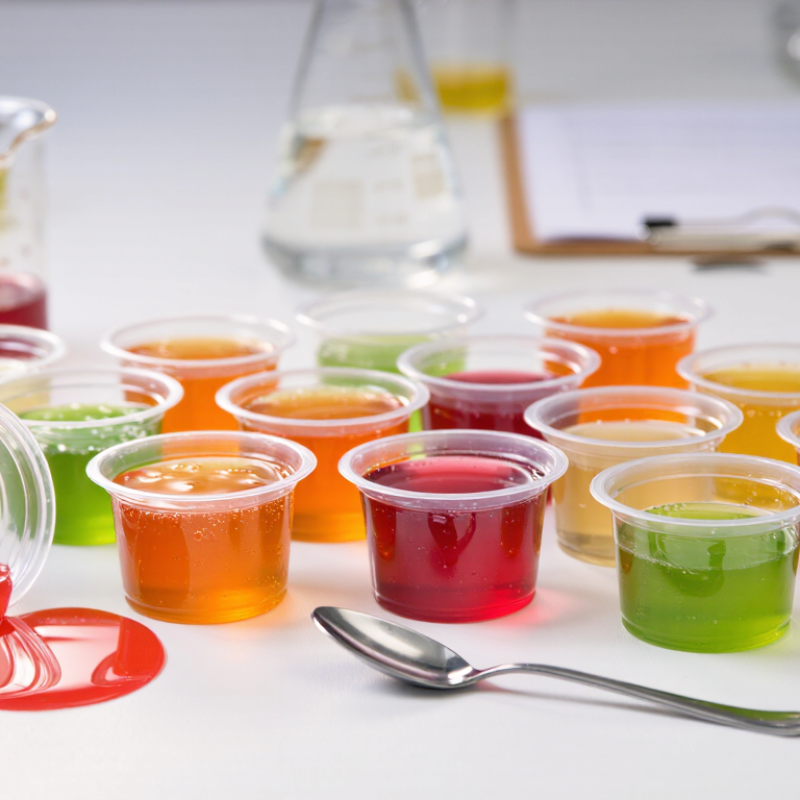
A functional jelly is a soft, gelled food formulated with ingredients beyond basic flavor and texture. Common types include fruit jellies with added fiber, vitamin-fortified pieces, protein gels, and probiotic formulations. Performance depends on pectin or gelatin, acidity, heat, and storage conditions. Small changes matter.
Applications range from portion-controlled snacks to travel-friendly nutrition formats and food-service add-ons. Grand View Research estimated the global functional food market at US$309.6 billion in 2023. This broader category signals demand, not a jelly-specific forecast. WHO’s 2024 healthy-diet guidance recommends at least 400 g of fruits and vegetables daily. Jelly should not be presented as a substitute for whole produce. Adding an ingredient also does not automatically prove a benefit. Texture can betray the formula: a gummy center or watery edge may indicate process or stability problems.
Tip: Ask suppliers for ingredient specifications, shelf-life and stability data, and batch-level test records. Check whether heat-sensitive ingredients withstand processing and whether nutrition claims match the evidence. I would test a production sample, not just a polished showroom piece.
Key Ingredients and Formulation Considerations
Functional jelly formulation begins with the intended serving, not a crowded ingredient list. Choose a clear purpose, such as adding fiber or a measured amount of a vitamin, then check whether the ingredient suits a moist, chewy format. Soluble fibers can change thickness and sweetness. Mineral salts may leave a bitter or metallic note. Small details matter. A bench sample should be tasted at room temperature, not only straight from the mixer.
Texture depends on the balance of water, sugar, acid, and gelling agents. Pectin, gelatin, and other hydrocolloids behave differently, so substitutions need fresh trials. Record pH, cooking temperature, and soluble solids for each batch; small shifts can affect firmness and shelf stability. Heat-sensitive nutrients may lose potency during cooking. Adding them later can help, but mixing must still distribute them evenly. A few pieces from one batch may not represent the whole run.
Flavor masking should not rely on extra sweetener alone. Citrus, berry, or mild botanical notes can soften some off-flavors, though they may also fade during storage. Test the jelly in its final packaging under realistic temperature and humidity conditions. Check ingredient compatibility and serving levels against the rules in each intended market. Pilot results can be imperfect: a jelly may hold its shape yet feel sticky after several weeks, so that texture deserves another test.
2026 Best Functional Jelly Manufacturer for Global Buyers? Key Ingredients and Formulation Considerations
Illustrative ingredient breakdown for a 100 g functional jelly prototype
Formulation note: This example totals 100 g and is for illustration, not a universal recipe or industry benchmark. Actual proportions depend on the active ingredients, desired texture, shelf life, and local food regulations. Confirm pH, processing conditions, and ingredient stability during product development.
Manufacturing Processes and Quality Standards
A reliable functional jelly process begins with controlled ingredients, not attractive packaging. Manufacturers should check incoming gelatin or pectin, sweeteners, acids, and added nutrients against approved specifications. Moisture, appearance, lot identity, and supplier documents all matter. Small details matter. During cooking, temperature and mixing time affect texture and batch consistency. Operators should monitor pH and soluble solids, then record the results rather than relying on taste alone. Heat-sensitive ingredients may need careful addition after cooking, where the formulation allows.
Depositing and cooling also need control. Uneven filling can change portion size, while excess surface moisture may affect the finished product. Keep records. Quality checks should cover weight, texture, seal integrity, and microbiological safety, with testing plans suited to the product and destination market. Retained samples and clear lot codes help buyers investigate concerns later. Shelf-life testing under realistic storage conditions is essential; a short trial may miss gradual changes in color or firmness. Not every batch behaves alike. Buyers should review process records, facility hygiene practices, and the manufacturer’s traceability system. Specifications can look excellent on paper, yet production details sometimes need closer questioning.
How Global Buyers Evaluate Functional Jelly Manufacturers
2026 Best Functional Jelly Manufacturer for Global Buyers?
How Global Buyers Evaluate Functional Jelly Manufacturers
Global buyers should evaluate a functional jelly manufacturer beyond its sample flavor. A successful sample does not prove that every production batch will match. Ask for written specifications covering texture, serving size, ingredient amounts, packaging, and shelf life. Details matter. Request recent quality records and clear explanations of how each batch is checked.
Review whether the manufacturer can explain ingredient stability, mixing controls, and filling conditions in practical terms. For example, ask how it manages jelly texture after storage in warm, humid conditions. Request test reports that match the product and batch, not generic certificates alone. Samples are only a start. Check whether packaging protects the product and carries the information required for your intended market. Confirm production capacity, lead times, and how changes to ingredients or packaging are communicated.
Communication is part of quality control. Compare the answers to the same questions across suppliers, and note where responses are vague. A polished presentation can be persuasive, but it should not replace traceable records or a realistic production plan. It is easy to overvalue flavor during an early review; that judgment may need revisiting after storage and repeat-batch checks. Ask for a pilot run when possible, then compare its texture, taste, and documented specifications with the approved sample.
Sourcing, Compliance, and Market Trends in 2026
For global buyers, choosing a functional jelly manufacturer in 2026 means looking beyond flavor samples. Ask for ingredient specifications, allergen statements, batch traceability, and recent test reports. Check whether the manufacturer can explain how active ingredients are protected during heating and storage. A bright fruit aroma is useful; documented stability is more useful. Request pilot samples in the intended packaging, then compare texture and ingredient levels after realistic storage. One detail is often overlooked: a jelly can set beautifully in a small trial and behave differently on a faster production line.
Compliance needs market-by-market review. Confirm permitted ingredients, label wording, nutrition declarations, and claim requirements with qualified local advisers before production. A supplier’s certificate does not automatically clear a finished product for every destination. Keep dated specifications and change-control records. Small label edits can matter. Even a revised serving size may affect the nutrition panel or usage directions. There is no perfect checklist, and paperwork can lag behind a formulation change; build time for verification.
Market demand is moving toward convenient portions, recognizable ingredients, and reduced-sugar options, but texture still matters. Buyers should test whether a lower-sugar recipe stays stable and pleasant after transport. Ask about minimum order quantities, lead times, packaging barriers, and contingency plans for ingredient shortages. Clear answers are reassuring. Vague answers deserve follow-up. In 2026, a capable partner should share evidence, flag trade-offs, and avoid promising health outcomes that the product data cannot support.
| 2026 Best Functional Jelly Manufacturer for Global Buyers? - Sourcing, Compliance, and Market Trends in 2026 | ||||
|---|---|---|---|---|
| Evaluation Dimension | What Global Buyers Should Check | Useful Evidence or Data | 2026 Sourcing Relevance | Key Risk or Qualification Note |
| Product and format capability | Confirm whether the facility can produce the required gel or jelly format, portion size, texture, flavor profile, and packaging type. | Product specification, approved samples, process flow, packaging specification, and documented shelf-life study. | Format flexibility helps buyers develop products for different retail, travel, and online channels. | Do not assume that a sample’s texture or flavor will remain unchanged at commercial scale; validate production-scale samples. |
| Ingredient traceability | Check the origin and specifications of active ingredients, sweeteners, gelling agents, flavors, and other key inputs. | Ingredient specifications, supplier declarations, lot records, and certificates of analysis where applicable. | Traceable inputs support supplier qualification, recall readiness, and market-specific documentation. | Ingredient origin, permitted use, and documentation requirements can differ by destination market. |
| Food-safety system | Review the facility’s hazard analysis, preventive controls, sanitation program, allergen controls, and recall procedures. | Current audit reports or certificates, HACCP documentation, food-safety plans, and mock-recall records. | Documented food-safety controls are central to import approval and retailer or distributor onboarding. | Certification does not replace the buyer’s own supplier assessment or applicable legal obligations. |
| United States compliance | Assess applicable FDA requirements, including food-facility registration where required, preventive controls, and labeling rules. | Facility registration status where applicable, food-safety documentation, ingredient review, and a market-ready label assessment. | Relevant to products entering the U.S. food supply chain; requirements depend on product classification and circumstances. | FDA facility registration is not an FDA product approval or endorsement. Confirm current rules with qualified regulatory counsel. |
| European Union compliance | Review ingredient and additive suitability, food information, allergen declarations, and any nutrition or health claims. | Ingredient and additive review against applicable EU rules; label review against Regulation (EU) No 1169/2011; claims review against Regulation (EC) No 1924/2006. | Useful for planning EU market entry and preparing labels and product claims before shipment. | Claim authorization and permitted additive use depend on the specific ingredient, food category, and wording. |
| Claims and substantiation | Separate general product descriptions from regulated nutrition or health claims; check evidence before making benefit statements. | Claim-by-claim legal review, ingredient-use rationale, and scientific substantiation appropriate to the target jurisdiction. | Careful claim design can reduce relabeling risk across markets with different rules. | A product containing a functional ingredient does not automatically qualify for a health claim or disease-related statement. |
| Quality and batch consistency | Agree on measurable acceptance criteria for weight, texture, appearance, flavor, seal integrity, and microbiological limits. | Approved product specification, batch-release records, test methods, and agreed sampling plan. | Clear specifications make supplier performance easier to monitor across repeat orders. | Define test methods and tolerance limits in the quality agreement rather than relying on informal descriptions. |
| Shelf life and storage | Verify shelf life under stated storage conditions and assess whether temperature control is needed during shipping or storage. | Stability or shelf-life study, packaging validation, storage instructions, and shipping-condition assessment. | Long-distance sourcing makes validated shelf life and packaging performance important commercial factors. | Do not infer shelf life from a similar product; it must be supported for the specific formulation and pack. |
| Allergen and dietary controls | Check allergen handling, cross-contact controls, ingredient declarations, and any vegetarian, vegan, or other dietary requirements. | Allergen matrix, cleaning validation or verification records, ingredient declarations, and relevant supplier statements. | Supports accurate labeling and reduces risk for consumers with allergies or specific dietary needs. | Dietary suitability depends on the full formulation and manufacturing controls, not only the primary gelling ingredient. |
| Packaging and export readiness | Confirm food-contact suitability, seal performance, case configuration, shipping marks, and destination-language label requirements. | Packaging specifications, applicable food-contact documentation, artwork approval, and export document checklist. | Packaging and documentation affect customs clearance, product protection, and retail readiness. | Food-contact rules and import documentation vary by destination; validate them before production. |
| Capacity and lead-time planning | Request realistic capacity information, production lead times, minimum order quantities, and contingency plans. | Written production plan, order assumptions, change-control process, and capacity review for peak periods. | Early planning helps buyers coordinate launches and manage demand variability. | Capacity figures are not guarantees; confirm them for the requested formula, packaging, and delivery window. |
| Market and formulation trends | Evaluate demand for portion-controlled formats, transparent ingredient information, reduced-sugar options, and convenient on-the-go products. | Buyer research, channel feedback, consumer testing, and market-specific regulatory review. | These are product-development considerations for 2026, not guaranteed demand forecasts. | Any “reduced,” “free from,” or similar comparative or nutrition claim must meet the rules of the target market. |
| Commercial qualification | Compare total landed cost, payment terms, ownership of formula and artwork, change notification, and complaint handling. | Quotation with assumptions, quality agreement, supply agreement, and defined escalation contacts. | A complete commercial review reduces surprises after a supplier is selected. | Compare like-for-like specifications, including pack size, testing, logistics, and documentation scope. |
FAQS
It is a soft, gelled food with added ingredients, such as fiber, vitamins, protein, or probiotics. The base may use pectin or gelatin.
No. It should not replace whole produce. Adding nutrients also does not prove a health benefit.
Pectin or gelatin, acidity, heating, mixing, and storage conditions can all affect texture. Small details matter.
Ask about ingredient specifications, pH, soluble solids, portion weight, texture, seals, and microbiological testing. Keep records.
Request stability tests under realistic storage conditions. Check for changes in color, firmness, or moisture over time.
Request written specifications, batch-level test reports, traceability records, production capacity, lead times, and details about communicating product changes.
One sample cannot show whether every batch will match. A pilot run can help compare production with the approved sample.
Flavor matters, but it can distract from storage or batch consistency. I may overvalue a good first taste; repeat checks could change my view.
Conclusion
This article explores functional jelly as a convenient, versatile food format designed to deliver ingredients such as fruit extracts, vitamins, minerals, fiber, or other nutrients in a soft, portable serving. It outlines common product types and applications, then explains how ingredient selection, taste, texture, stability, serving size, and packaging shape an effective formulation. Readers will also learn how manufacturing steps—from mixing and heating to filling and inspection—support consistent quality, product safety, and shelf life.
For global buyers, choosing a Functional Jelly Manufacturer involves assessing production capabilities, ingredient traceability, quality-control systems, documentation, communication, and the ability to meet target-market requirements. The article also considers sourcing strategies and emerging 2026 market trends, including demand for convenient wellness products, clearer ingredient information, and flexible product development. Together, these considerations provide a practical framework for comparing suppliers and building a reliable functional jelly product for different markets.

Blog Tags: